

What Happened
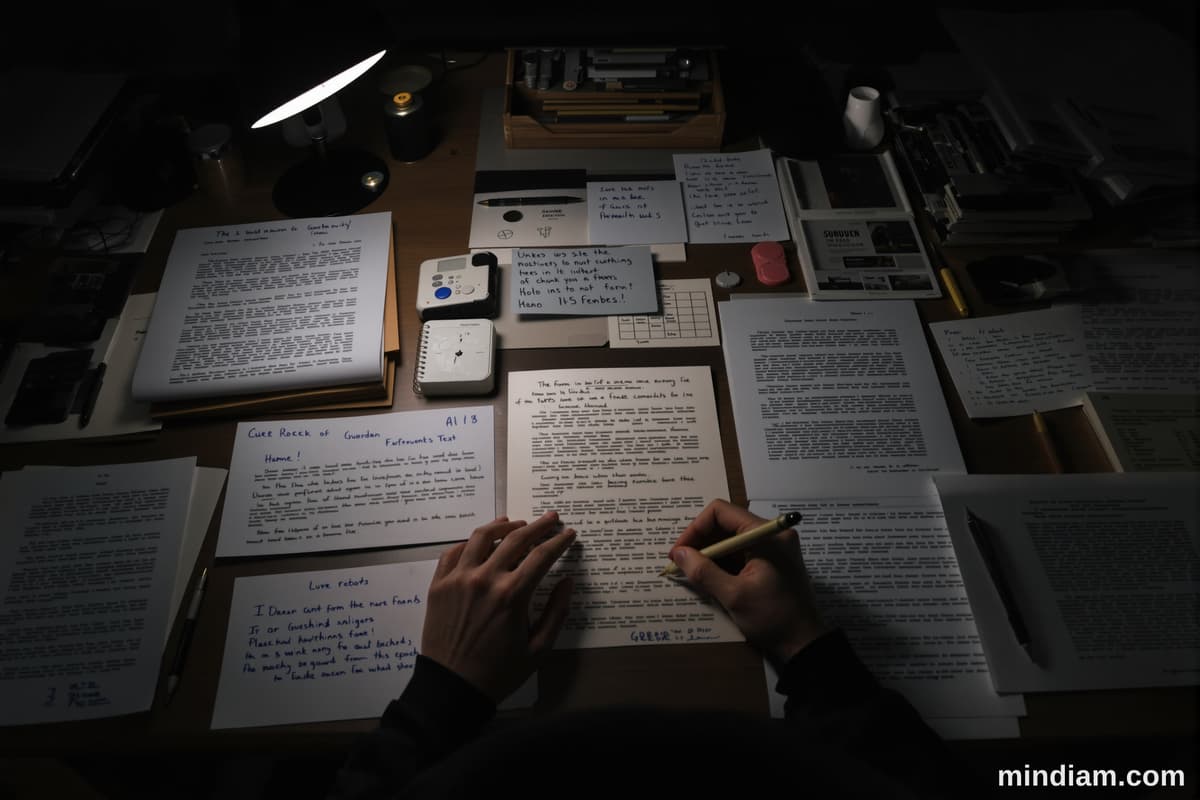
Australian publishers are confronting a surge of AI-generated book submissions and a wave of accusations against authors, prompting the industry to look at formal certification as a way to verify human authorship.
ABC Radio National's Critics Corner spoke with Matthew Rubery, professor of Modern Literature at Queen Mary University, about how readers and publishers can tell whether a book was written by a person or a machine. The conversation reflects a broader pattern: online sellers flooded with AI "slop" books, publishing houses inundated with AI-generated submissions, book deals falling apart, and three literary prize winners this year accused of using the technology, according to ABC News reporting.
Certification schemes are gaining traction internationally. Methods include interviewing the author, requesting edit histories, and running AI-detection tools across the manuscript. Trevor Woods, CEO of the human-authored certification company Proudly Human, told ABC News he expected AI detection tools to become less effective over time. In the short term, however, his service has seen a spike in interest. Woods said that spike could give rise to a "brand new industry," predicting the certification sector could be worth "hundreds of millions or billions of dollars" at its height, with individual authors, publishers and writers' groups footing the bill.
Why It Matters
The Australian Society of Authors cited a UK report finding that 86 per cent of authors surveyed reported a drop in income due to generative AI. One author quoted in the ABC piece described the effect of AI-generated summaries of their work in direct terms: "If someone wanted to read a condensed version of my book in a couple of hours without paying for it, they could listen to this instead," and added, "Each time a reader watches or listens to such a clip rather than reading or listening to my book is a sale I lose and royalties I don't receive."
The question of who bears the cost of certification is not settled. Woods confirmed that authors, publishers and writers' groups would be expected to pay, which raises access concerns for emerging writers in particular.
Key Details
The risk of false accusation is a live concern. One source quoted in the ABC article noted: "It's important for the industry to be aware of and guard against frivolous or malicious accusations of AI being used to derail a writer's career." The same source observed that such accusations "will always be easier to level at new authors," given that established writers have longer publication histories to draw on as evidence of their voice.
Woods himself acknowledged the limits of the current approach, saying "there will be too many challenges for this to be successful" as AI tools improve. The certification model is, by his own account, a response to a transitional moment rather than a permanent solution.
Background and Context
The training data dispute sits beneath all of this. Australian authors and their advocates have framed the use of published work to train AI models without consent as "the largest theft of labour in human history." The Australian Society of Authors has argued that "AI companies seeking an opt-out model are asking government to reverse a basic principle: if you want to use someone else's work, you should first seek permission."
That position aligns with calls from authors' groups in other countries for opt-in frameworks, though no binding Australian legislation on the point has been passed as of the date of this article.
What Comes Next
The certification industry is still forming. Proudly Human is among the companies attracting attention, but the field is not yet standardised. Woods expects the detection tools underpinning these schemes to degrade in accuracy as AI-generated text becomes harder to distinguish from human writing, which would put greater weight on process-based verification such as edit histories and author interviews.
For Australian publishers, the immediate practical question is how to handle submissions and prize entries while formal standards remain absent. The ABC reporting suggests the industry is watching international certification models closely, without yet settling on a single approach.