

What Happened
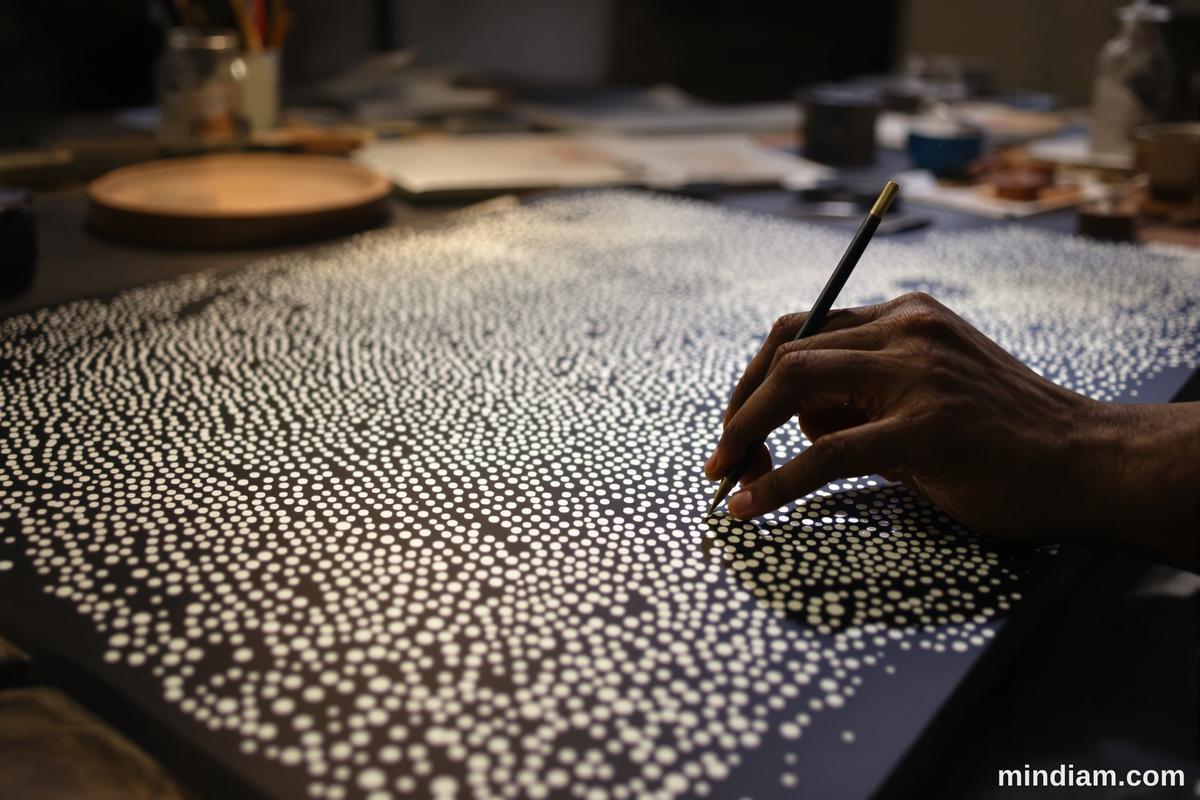
The chair of the National Gallery of Australia's First Nations advisory group has publicly described AI image generation as a form of cultural theft, telling the Guardian that the technology strips the authenticity from Indigenous artworks by severing them from the lineage and lived experience of the artist who created them.
"It's a theft of the agency of the artist. It rips the authenticity out of it, because it's not been made by anyone who has the connection … the artist's family lineage is not there, the lived experience is not there," the chair said, as reported by the Guardian on 2 November 2026.
Searches on sites including Temu, Shein and Amazon reveal countless works described as Aboriginal paintings, as well as items such as coasters and stubby holders bearing Aboriginal-style designs, mostly without attribution to any artist.
The National Association for the Visual Arts (Nava), the peak body for Australian visual artists, said its members had "documented AI scraping Indigenous art centre websites, removing artists' names and altering their work." Nava described the situation as causing "cultural and economic harm" and noted that members had "raised concerns about AI-generated 'Aboriginal-style' images and designs that imitate community-specific techniques, stories, motifs and mark-making."
Why It Matters
The economic injury to First Nations artists operates on two levels, according to the Guardian's reporting. "The corporate client can pay you once and then make unauthorised Aboriginal derivative work and use the faces of the artists without consent," the advisory group chair said. The follow-on consequence is direct market competition: "Not only do [the artists] not get the repeat business, but when they go to make new work they're competing against an AI."
Experts quoted in the Guardian are particularly worried about the risks to Indigenous cultural and intellectual property in a context where AI companies can collect anything available online, including songs and paintings that carry sacred and cultural knowledge. One observer noted they had seen works where it was unclear whether the design had come from a First Nations community or person, "or if it's something generic that they've whipped up."
The concern is not limited to economic loss. Indigenous cultural and intellectual property encompasses knowledge systems, ceremonial material and community-specific stories. When AI models are trained on such material without consent, the resulting outputs can circulate that knowledge outside the cultural protocols that govern it.
Key Details
- Nava has documented AI scraping of Indigenous art centre websites, with artists' names removed and works altered before being sold.
- The advisory group chair described the practice as occurring "partly because of lack of control over ownership and respect for Aboriginal culture."
- AI-generated imitation designs on Temu, Shein and Amazon appear mostly without attribution to any artist.
- Attorney-General Michelle Rowland stated there are "no plans to weaken copyright protections," though AI companies have already trained models on Australian artists' work, including that of Kylie Minogue and Nick Cave, without compensation.
- The First Nations Data Sovereignty framework "recognises the right of First Nations peoples to exercise authority over their data, cultural material and knowledge," a principle advocates say current AI practices violate.
Background and Context
Australia does not have a standalone Indigenous cultural and intellectual property law. Existing copyright protections apply to individual works but do not cover communal or traditional knowledge, which creates a gap that AI scraping exploits. The federal government under Anthony Albanese has pledged to protect Australian creatives from copyright theft, and Rowland's statement of "no plans to weaken copyright protections" was made in that context. Critics argue that a pledge not to weaken existing law falls short of addressing the specific vulnerabilities that AI scraping creates for First Nations artists.
The broader pattern of AI companies training on publicly available content without compensation or consent has affected Australian artists across genres. The Guardian's reporting notes that well-known figures including Kylie Minogue and Nick Cave have had their work used in AI training datasets without payment. For Indigenous artists, the concern carries an additional dimension: the cultural protocols that govern the creation and circulation of certain works are not legible to automated scraping systems, which treat all publicly accessible content as equivalent.
What Comes Next
Nava and advocates for First Nations artists are pressing for legislative reform that goes beyond existing copyright to address communal cultural knowledge. The First Nations Data Sovereignty framework's recognition of Indigenous peoples' authority over their "data, cultural material and knowledge" is cited as a basis for stronger protections, though no specific legislation has been introduced. The federal government's review of copyright in the context of AI remains ongoing. Artists and peak bodies are expected to make submissions arguing that current protections are inadequate for the specific risks posed by generative AI to Indigenous cultural and intellectual property.